


TL;DR
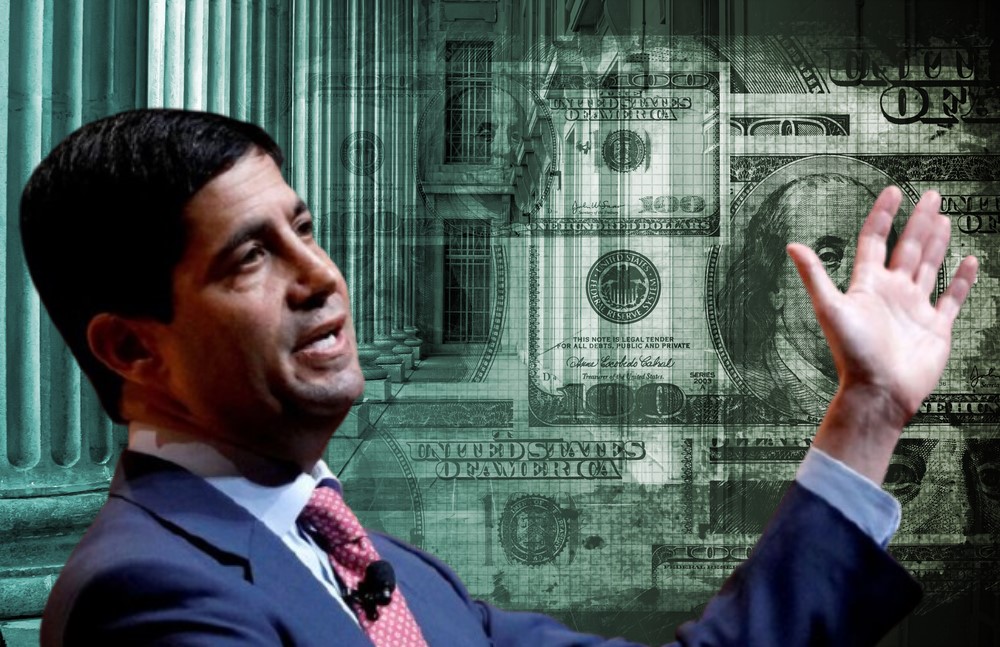
- Donald Trump has nominated Kevin Warsh, a former Federal Reserve governor, to succeed Jerome Powell as Fed chair, bringing an experienced crisis-era policymaker into a closely watched confirmation process.
- Warsh’s public record includes skepticism toward prolonged quantitative easing and large balance sheets, alongside a narrower interpretation of the Federal Reserve’s mandate; for crypto markets, the development does not signal stimulus or policy support.
President Donald Trump’s decision to nominate Kevin Warsh as Federal Reserve chair has drawn attention because he combines establishment credentials with long-standing ties to Trump’s economic circle. Supporters of the Warsh nomination framed it as a move to bolster the central bank’s credibility rather than a confrontation with the institution. For investors, the implication is caution rather than urgency. For crypto markets, it points to stability rather than stimulus.
Warsh is a former Federal Reserve governor with direct experience during the 2008 financial crisis. He is widely viewed as a familiar figure in monetary policy debates. As a Trump Fed chair nominee, he does not fit the profile of a disruptive or openly political pick. Instead, the choice appears to be an attempt to satisfy markets and the Senate while accommodating Trump’s repeated pressure for lower rates. The nomination reflects a balancing act in Federal Reserve leadership, with continuity taking precedence over disruption.
Why Trump Picked Kevin Warsh for Fed Chair
The selection of Kevin Warsh can be read as an effort to balance credibility with alignment on rates while avoiding ideological loyalty. Trump has consistently argued that interest rates should be lower. Warsh approaches that question differently. He has historically opposed aggressive quantitative easing. In more recent commentary, however, he has signaled openness to lower rates alongside a smaller and more disciplined balance sheet.
Supporters of Warsh’s nomination for chair have cast him as reassuring to markets even as Trump continues to publicly criticize the Fed. That framing matters in a narrowly divided Senate, where confirmation debates often focus as much on institutional trust as on policy direction.
Warsh also brings procedural familiarity as he previously served on the Federal Reserve Board of Governors. That reduces uncertainty about how he would operate inside the institution. As the nominated Jerome Powell successor, subject to Senate confirmation, he is widely seen as an incremental choice rather than a rupture with recent leadership.
What a Warsh-Led Fed Signals for Monetary Policy
A Warsh-led Federal Reserve does not guarantee immediate rate moves. His record suggests that inflation data and broader financial conditions would guide any policy shift. Political pressure alone would not be decisive. That reality shapes the near-term FOMC policy outlook, even amid heightened attention to leadership changes.
Warsh has frequently argued that central banks risk damaging credibility when they rely too heavily on forward guidance or react too quickly to market volatility. As a result, the signal embedded in this nomination is one of restraint within existing frameworks of Federal Reserve leadership. Interest rate decisions would likely remain cautious, with limited appetite for pre-commitment.
On balance sheet policy, Warsh’s skepticism is well documented. He has criticized prolonged quantitative easing and the normalization of a permanently large balance sheet. While that stance does not imply abrupt tightening, it reinforces the view that accommodation would not be expanded simply to support asset prices.
Kevin Warsh, the Fed, and Innovation
Warsh’s approach to innovation has consistently emphasized institutional boundaries. He has argued that the Federal Reserve should stay within the limits of its mandate. Consequently, he criticized efforts to expand the central bank’s role into areas such as climate policy and other non-core objectives.
As a former governor and nominee to succeed Jerome Powell, Warsh has framed technological change as something markets and regulators adapt to. He does not see it as a domain the Fed should actively shape. That perspective reflects a narrower view of central banking. It centers on price stability and financial functioning rather than broader social or industrial goals.
Stability Over Stimulus — Where Crypto Actually Fits
The nomination of Warsh does not represent a pro-crypto pivot. It does, however, suggest a more restrained posture. Under Kevin Warsh as the Fed chair, crypto issues would likely be filtered through concerns about fraud, financial stability, and the role of a potential central bank digital currency. They would not be framed as an existential monetary threat. That distinction matters for crypto regulation.
Warsh has described crypto, and Bitcoin in particular, as software innovation rather than money, while also warning about scams and speculative excess. Those comments point to a critical but nuanced view. He has not endorsed crypto markets, nor has he argued that they sit fully outside public policy scrutiny. For digital assets, his record suggests skepticism without hostility.
From an institutional standpoint, this implies that the Fed under Warsh may view most crypto-specific issues as falling primarily under the remit of other regulators. For investors assessing what Kevin Warsh means for crypto, the implication is constraint. The central bank would neither champion nor suppress the sector through monetary policy tools.
Why Markets Reacted Anyway
Despite the absence of stimulus signals, markets reacted sharply to the announcement. U.S. Treasury yields moved higher following the nomination, while Bitcoin and crypto prices in general dropped. The market seems concerned about Warsh’s hawkish reputation on inflation credibility and uncertainty about the timing of future rate cuts.
For digital assets, the response underscored how sensitive prices remain to perceptions of Fed leadership. Rather than pricing reduced tail risk, markets appeared to focus on the possibility that a Warsh-led Fed would resist easing. That reaction highlights the gap between expectations of stability and expectations of accommodation.
>>> Read more: Senate Confirms Mike Selig as CFTC Chair
What This Nomination Really Says About Trump’s Strategy
Taken together, Kevin Warsh’s nomination to chair the Fed can be interpreted as an attempt to thread the needle between aligned policy preferences and the need for Senate and market viability. Rather than escalating tensions with the central bank, Trump appears to have opted for a candidate who can withstand confirmation scrutiny while still sharing concerns about prolonged tight policy.
This approach fits if we interpret Trump’s broader Fed policy direction as built on sequencing. Monetary policy remains institutionally insulated, while pressure for lower rates continues through rhetoric and appointments. For crypto markets, the outcome is neither endorsement nor attack. Stability replaces stimulus, and confrontation gives way to constraint.