



TL;DR
- Bitcoin miner capitulation risk has increased as a sharp Bitcoin price drop collides with high fixed mining costs and weather-related disruptions.
- While mining shutdowns and Bitcoin miners selling can add short-term pressure, the network is designed to adjust, meaning stress reshapes the mining sector more than it threatens Bitcoin itself.
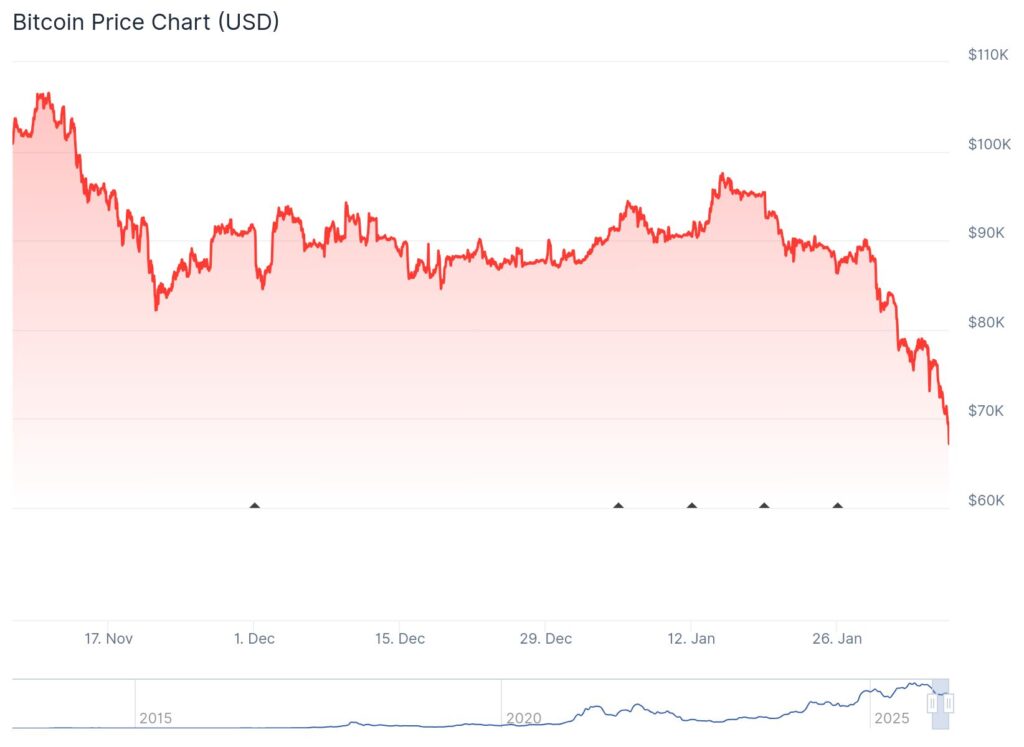
Bitcoin miner capitulation has moved back into focus as the market absorbs a sharp Bitcoin price drop. Over the past two weeks, Bitcoin has fallen quickly enough to strain the economics of mining, pushing revenue below levels many operators need to cover routine expenses. As margins tighten, pressure is building across the mining sector.
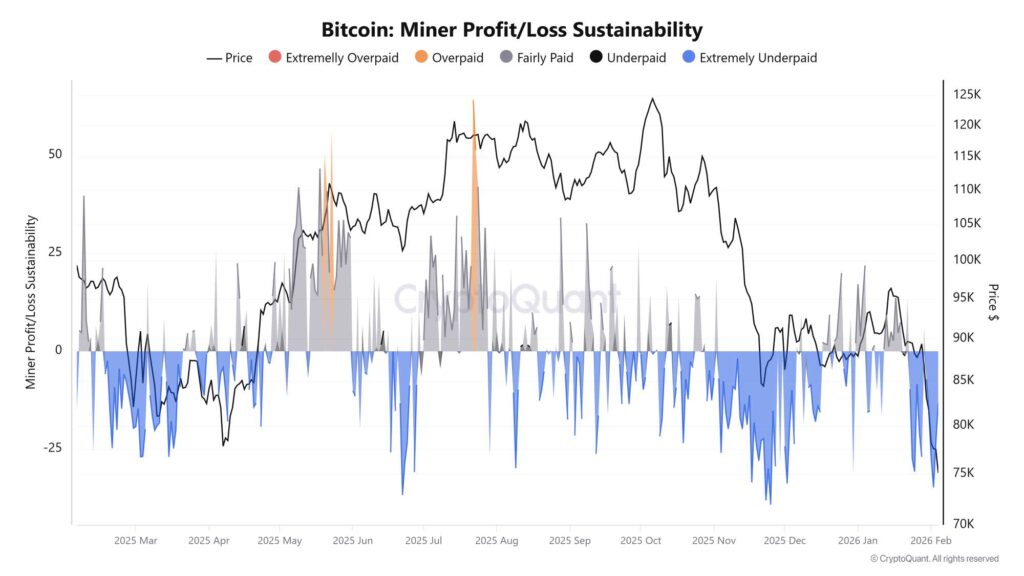
Bitcoin mining profitability has weakened because revenue moves with price, while Bitcoin mining costs do not. Electricity, hosting contracts, and financing obligations remain largely fixed in the short term. That mismatch matters when prices fall quickly. The added concern for the network is not panic, but resilience: how stress among miners interacts with Bitcoin network security if conditions remain tight.
Bitcoin price drop and the new stress point
The Bitcoin price drop has been steep enough to force miners to reassess short-term operations. On February 5, 2026, Bitcoin traded around $70,000, down from roughly $84,000 a few days earlier and well below mid-January levels. For industrial miners that plan around relatively stable cash flow, this kind of move compresses margins quickly.
The Bitcoin price drop impact on miners is magnified because revenue is earned in Bitcoin while most costs are paid in fiat. Power contracts and hosting fees do not adjust downward when price falls. That imbalance can turn marginal operations unprofitable almost overnight, especially for miners running older equipment or higher-cost power.
Bitcoin mining profitability and cost pressure
Why Bitcoin mining profitability is falling comes down to timing and structure. When price declines, revenue per unit of hashpower drops immediately. Costs, by contrast, remain fixed. A miner that was near breakeven at one price level can slip into losses after a sudden move lower.
This is where Bitcoin mining costs become decisive. Operators with cheap power and efficient fleets can withstand pressure longer. Those without that buffer face difficult choices. The current environment does not affect all miners equally, but it does expose structural weaknesses across the sector.
Winter storm impact on Bitcoin mining
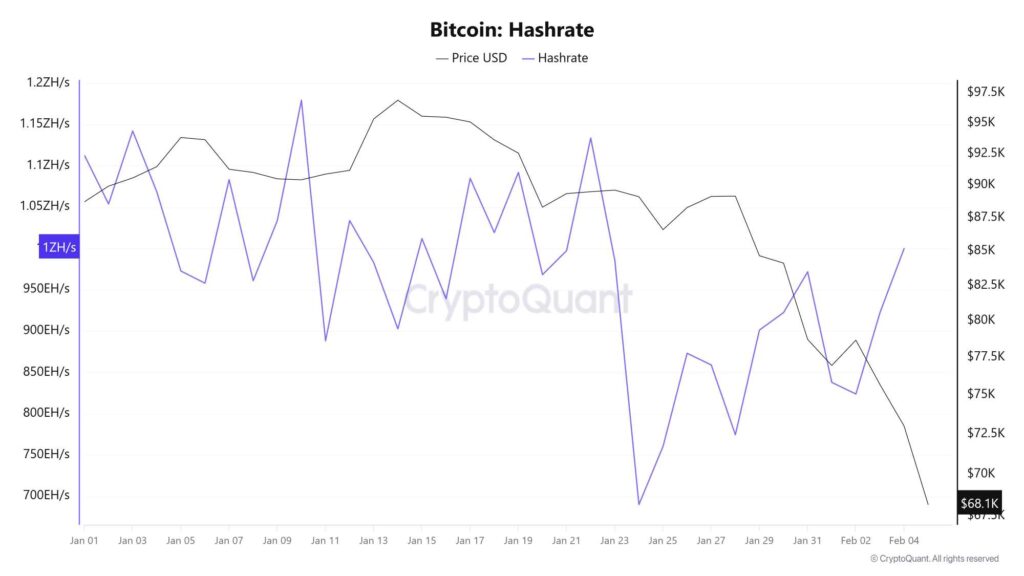
Winter storm impact on Bitcoin mining added a second shock at a fragile moment. Severe U.S. winter weather in late January and early February forced some miners to curtail activity or shut down temporarily. Network data shows a notable drop in hashrate during this period, reflecting outages and voluntary reductions tied to grid conditions.
The storm did not create the underlying stress, but it intensified it. For miners already dealing with falling revenue, even short disruptions reduce cash flow and delay recovery. In some regions, miners also participate in grid programs that pay large power users to cut consumption during emergencies, which can help offset losses but does not solve longer-term profitability issues.
>>> Related: Bitcoin Hashrate Drop During US Winter Storm
Mining shutdowns and rising miner stress
Mining shutdowns are the most visible sign of miner stress. Are miners shutting down Bitcoin mining? In this phase, some shutdowns were weather-related, while others reflected economic decisions. Both matter, because they reduce overall network activity and signal that a portion of the industry is operating below sustainable levels.
When enough miners reduce activity at once, the market begins to talk about Bitcoin miner capitulation. In practical terms, it means weaker operators stop mining, sell equipment, or liquidate Bitcoin holdings to stay solvent. That process is uneven, but it tends to concentrate activity among miners with lower costs and stronger balance sheets.
What happens to Bitcoin if miners capitulate
What happens to Bitcoin if miners capitulate is usually less dramatic than the phrase suggests. In the short term, reduced hashpower can slow block production slightly until the network adjusts. Transaction processing continues, but confirmation times can lengthen temporarily during peak stress.
The economic effect can be more visible. Bitcoin miners selling reserves to fund operations can add near-term supply to the market. At the same time, capitulation can reduce ongoing selling later, because surviving miners tend to be more efficient and financially stable. This is why some analysts view capitulation as a painful but stabilizing phase rather than a systemic threat.
What miner capitulation means for Bitcoin’s mining sector
What miner capitulation means for Bitcoin depends on scale and duration. A brief squeeze tied to weather disruptions and a short-lived price decline may pass with limited long-term impact. A prolonged period of low profitability, by contrast, can accelerate consolidation across the mining sector.
Smaller or higher-cost operators may exit, while larger firms gain share. The industry shifts focus from expansion to efficiency, liquidity management, and power optimization. For the broader market, this process reshapes who produces new Bitcoin rather than whether Bitcoin continues to function.
Bitcoin network security under stress
Bitcoin network security is designed to withstand periods of disruption. When mining activity declines, the protocol adjusts difficulty over time to keep block production near its target rate. That mechanism does not eliminate stress, but it prevents temporary shocks from breaking the system.
For readers assessing the current moment, the key point is context. The Bitcoin price drop and winter storm impact hit mining economics simultaneously, increasing pressure on weaker operators. Bitcoin miner capitulation, if it deepens, would reflect a rebalancing of the mining sector rather than a failure of the network itself.
The next signals to watch are straightforward: price stability, the pace of mining shutdowns, and how quickly operations recover after weather disruptions. Together, those factors will determine whether current stress fades or reshapes the industry more permanently.