


TL;DR
- President Donald Trump signed an executive order to dismantle transnational cybercrime networks responsible for large-scale online fraud targeting Americans.
- The directive expands coordination between U.S. agencies to prosecute cybercriminal groups, impose sanctions, and disrupt global scam infrastructure.
- Many fraud schemes today involve digital payment methods, which means investigations into international scam networks may involve crypto platforms.
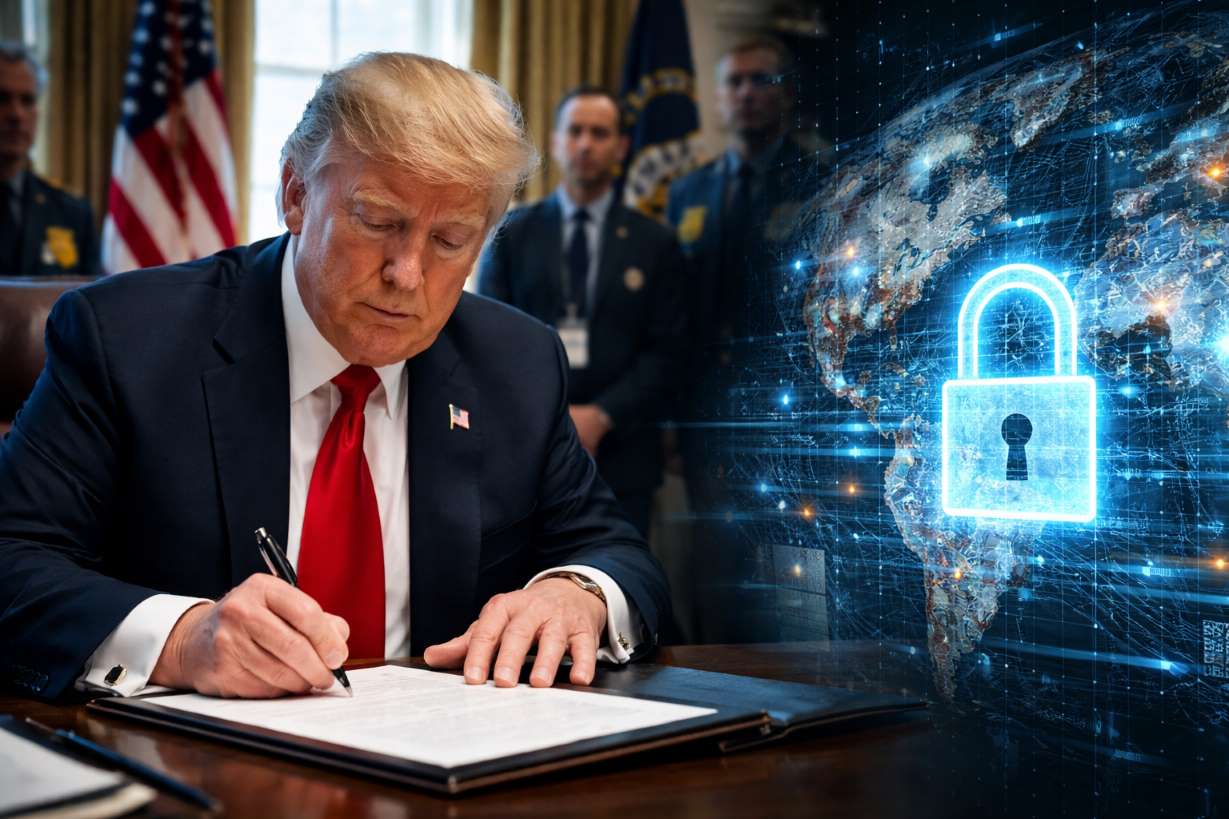
U.S. President Donald Trump signed an executive order on March 5, 2026, directing federal agencies to intensify efforts against transnational criminal organizations involved in cybercrime and online fraud targeting American citizens. The directive focuses on large-scale scam operations that rely on digital infrastructure. They reach victims through social media, messaging platforms, and fraudulent websites.
Trump’s cybercrime executive order instructs agencies, including the Department of Justice, the Treasury Department, the Department of Homeland Security, and the State Department, to coordinate investigations. They must strengthen intelligence sharing and develop a comprehensive strategy to disrupt international fraud networks. The White House says these operations have evolved into sophisticated criminal enterprises operating primarily from overseas locations.
The executive order itself does not reference cryptocurrency or blockchain technology. However, many online scams investigated by law enforcement in recent years have incorporated digital asset payments. For audiences following developments in digital finance, the policy highlights the broader enforcement environment surrounding financial fraud that can intersect with cryptocurrency markets.
A Federal Strategy Against Global Fraud Networks
The executive order directs federal agencies to develop a coordinated action plan targeting transnational criminal organizations responsible for cyber-enabled fraud schemes like phishing, investment fraud, ransomware attacks, and sextortion. Authorities say these scams frequently rely on digital platforms to build trust with victims before requesting financial transfers.
Under the directive, the Justice Department will prioritize prosecutions against individuals and organizations linked to these fraud operations. The Treasury Department may also use financial sanctions to disrupt networks that facilitate criminal activity. At the same time, intelligence agencies are tasked with expanding information sharing to identify infrastructure used by cybercrime groups.
The policy also calls for expanded diplomatic tools. The State Department may apply visa restrictions and could limit foreign assistance for jurisdictions that fail to cooperate with U.S. investigations targeting cybercrime networks.
Scam Operations Are Increasingly Sophisticated
Government officials describe many fraud networks as highly organized enterprises operating from overseas hubs. These groups often use social engineering tactics, including fake investment platforms, impersonation schemes, and long-running confidence scams, to persuade victims to transfer funds.
According to law enforcement reports and industry research, some fraud schemes increasingly reference cryptocurrencies to create the appearance of legitimacy. Victims may be directed to fraudulent trading platforms or asked to send payments to addresses controlled by scammers as part of schemes that falsely promise high returns.
These tactics have become particularly visible in so-called “pig-butchering” scams. Criminals build relationships with victims online before persuading them to deposit funds into fraudulent investment platforms.
The Role of Blockchain Investigations in Financial Crime Cases
While the executive order itself does not address cryptocurrency investigations, blockchain analysis has become a common investigative tool in fraud and cybercrime cases. Public blockchain records are immutable and pseudonymous. While wallet addresses conceal real identities, their transactions remain fully transparent. This transparency allows investigators to track funds moving between addresses and identify clusters of activity linked to criminal operations.
Law enforcement agencies increasingly work with firms specializing in blockchain analytics to trace digital asset flows across wallets and exchanges as part of broader financial crime investigations. These techniques have been used in multiple high-profile cases involving ransomware groups, online fraud rings, and darknet marketplaces.
For investigators, blockchain transparency can provide an evidentiary trail that complements traditional financial intelligence methods used to track illicit funds.
Possible Implications for Digital Asset Platforms
Although Trump’s cybercrime executive order does not specifically address cryptocurrencies, its focus on dismantling large-scale fraud networks could indirectly affect digital asset service providers. Cryptocurrency exchanges and other platforms already operate under anti-money laundering and know-your-customer requirements designed to detect suspicious financial activity.
As enforcement agencies prioritize fraud investigations linked to transnational criminal organizations, compliance expectations for financial platforms, including crypto platforms, may continue to evolve. Regulators and investigators often seek cooperation from exchanges when tracing illicit funds linked to scams or cybercrime cases.
For the broader digital asset industry, the executive order reinforces the wider policy trend of integrating cybercrime enforcement with financial intelligence tools to disrupt criminal financial flows.
>>> Read more: SAFE Crypto Act Targets Crypto Scams With Stablecoin Recovery
A Global Challenge for Law Enforcement
Cybercrime networks frequently operate across multiple jurisdictions, making international cooperation critical for effective enforcement. Many scam operations targeting Americans are believed to originate from organized centers located outside the United States.
The executive order emphasizes diplomatic coordination and intelligence sharing with foreign governments to disrupt these networks and bring perpetrators to justice.
As governments strengthen their response to cyber-enabled financial crime, Trump’s cybercrime executive order highlights growing enforcement attention on global fraud networks. The intersection between online fraud investigations and digital financial systems, including cryptocurrency, will likely remain an area of ongoing scrutiny for policymakers and industry participants.