


Estimated reading time: 6 minutes
TL;DR
- Turkmenistan will legalize holding, trading, and mining of digital assets starting January 1, 2026, under a new licensing framework.
- Exchanges, custodians, and miners must register or obtain licenses from the Central Bank, while banks are explicitly barred from offering crypto services.
- The law introduces strict advertising and branding rules and formalizes mining oversight, placing Turkmenistan within the region’s broader shift toward regulated crypto markets.
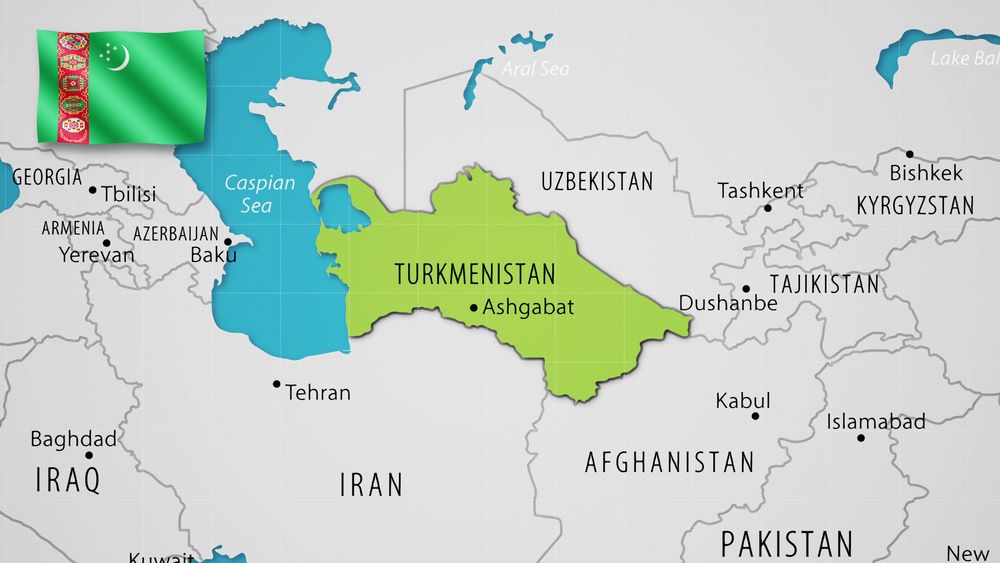
Turkmenistan has approved its first comprehensive law governing cryptocurrencies and other digital assets, establishing a licensing regime that will take effect on January 1, 2026. President Serdar Berdimuhamedov signed the legislation on November 28, 2025. With the new rules, the country moves from an unregulated environment into a supervised system that defines how digital assets may be held, mined, and traded. Turkmenistan now joins other Central Asian states that are shifting toward structured oversight of crypto activity.
What the Law Recognizes as Digital Assets
The statute introduces the term “virtual assets” and classifies them as a form of property under civil law. This designation allows individuals and companies to hold, store, transfer, and trade cryptocurrencies and other digital assets within a legal framework. The law also distinguishes between two types of tokens:
- Backed assets, which reference fiat, commodities, or other forms of value
- Unbacked assets, such as Bitcoin and similar cryptocurrencies
This classification sets the foundation for future technical rules that the Central Bank may introduce. However, Turkmenistan’s new crypto law does not extend digital assets to payments. Cryptocurrencies are not legal tender, and everyday consumer transactions remain outside their scope.
A Licensing System for Exchanges and Service Providers
Under the new framework, the Central Bank of Turkmenistan will oversee the licensing of crypto exchanges, custodians, and other virtual asset service providers wishing to operate in the country. The licensing regime includes requirements for:
- customer verification and AML controls
- custody and storage of digital assets
- internal governance
- reporting and record-keeping
These obligations resemble the rules used in many other jurisdictions. One clear difference, however, is the statute’s explicit ban on banks offering crypto services. Credit institutions cannot run exchanges, hold customer assets, or facilitate crypto transactions. This creates a sharper separation between banking and virtual assets than is typically seen in Europe or Asia.
The law also outlines how crypto services may be promoted. Advertising must include risk warnings and may not target minors. In addition, companies cannot use terms such as “Turkmenistan,” “Turkmen,” “state,” or “national” in branding or marketing. These restrictions are designed to prevent misleading associations with government institutions.
Mining Becomes a Regulated Industry
Turkmenistan also legalized crypto mining, although only within a structured system. Both individuals and legal entities may mine cryptocurrencies if they register their activities with state authorities. Registered miners must declare equipment, follow reporting procedures, and operate only in approved facilities. The law explicitly prohibits unregistered or hidden mining. This approach aligns Turkmenistan with regional counterparts such as Kazakhstan, where the regulation tied crypto mining oversight to energy planning and industrial policy.
By formalizing cryptocurrency mining, the law provides legal certainty for operators in Turkmenistan while giving the government a mechanism to monitor power consumption and compliance.
Part of a Regional Shift Toward Formal Crypto Regulation
Turkmenistan’s move is part of a broader trend across Central Asia. The region has moved from loosely regulated crypto activity to increasingly structured oversight. For example:
- Uzbekistan will introduce a stablecoin payments sandbox in 2026.
- Kazakhstan maintains a detailed licensing regime for exchanges and mining operators.
- Kyrgyzstan has launched a state-backed stablecoin and is testing additional tokenized instruments.
Compared to its neighbors, Turkmenistan’s crypto framework is more conservative. Nevertheless, it reflects the same shift toward clear rules and supervised market activity.
>>> Read more: Kazakhstan Cryptocurrency Crackdown: 3,500 Exchanges Shut Down
Implications for Market Participants
For crypto exchanges and custodians, the new framework provides a defined path to operate legally in Turkmenistan. Licenses offer regulatory clarity, although the separation from the banking system creates a narrower operating environment.
For miners, Turkmenistan’s significant energy resources may become an advantage. At the same time, registration and reporting rules introduce administrative responsibilities that operators must meet consistently.
For individual users, crypto becomes a legally recognized asset. They will be able to hold and trade digital assets through licensed platforms, though the absence of legal-tender status means crypto remains an investment or transfer mechanism rather than a domestic payment option.
>>> Read more: Pakistan Opens Crypto Licensing to Global Firms
Turkmenistan’s 2026 cryptocurrency law shifts digital asset activity from a regulatory grey area into a defined legal structure. The law recognizes digital assets as property, introduces licensing obligations, and sets mining rules. Its stricter components, such as the prohibition on bank involvement and explicit advertising restrictions, distinguish it from more market-oriented frameworks. Even so, the overall direction aligns with a regional trend toward formal oversight of digital asset markets.
How quickly the sector evolves will depend on licensing implementation, infrastructure readiness, and the level of commercial interest when the framework takes effect in January 2026.
Readers’ frequently asked questions
When will individuals and companies be allowed to mine or trade crypto legally in Turkmenistan?
Crypto mining and trading become legal on January 1, 2026, when the new virtual assets law takes effect in Turkmenistan. From that date forward, individuals and companies may participate in these activities as long as they meet the licensing and registration requirements defined by the Central Bank.
Are crypto exchanges allowed to operate in Turkmenistan, and under what conditions?
Yes. Crypto exchanges may operate if they obtain a license from the Central Bank. Licensed exchanges must follow rules for customer verification, custody, governance, and reporting. Banks are not permitted to provide crypto services under the new law.
Can residents use cryptocurrencies for payments inside Turkmenistan?
No. The new law does not recognize cryptocurrencies as legal tender in Turkmenistan, and it does not authorize digital assets for domestic payments. Residents may hold, trade, and mine crypto, but everyday transactions continue to rely on the national currency.
What Is In It For You? Action items you might want to consider
Assess expansion opportunities under the new licensing framework
Exchanges and custodians should evaluate whether Turkmenistan’s upcoming licensing regime aligns with their strategic plans. The market opens on January 1, 2026, and early applicants may benefit once the Central Bank begins issuing approvals.
Review compliance requirements for mining operations
Crypto mining operators in Turkmenistan need to examine the registration, reporting, and facility-approval rules before establishing a presence. Turkmenistan’s energy profile may be attractive, but operators must comply with the formalized oversight structure.
Verify licensing when using platforms in 2026
Individual users should confirm that any exchange or service provider they choose is licensed under the new framework. Crypto becomes legally recognized property, but platforms must meet regulatory standards to operate in Turkmenistan.