


TL;DR
- Israel approved a regulated Shekel stablecoin called BILS after a two-year pilot under supervision.
- The token must be fully backed by reserves and meet strict redemption and reporting requirements.
- The Shekel stablecoin launch is separate from Israel’s ongoing central bank digital currency plans.
Israel has approved its first regulated Shekel stablecoin, marking a controlled step into fiat-backed digital assets after two years of testing under a regulatory sandbox.
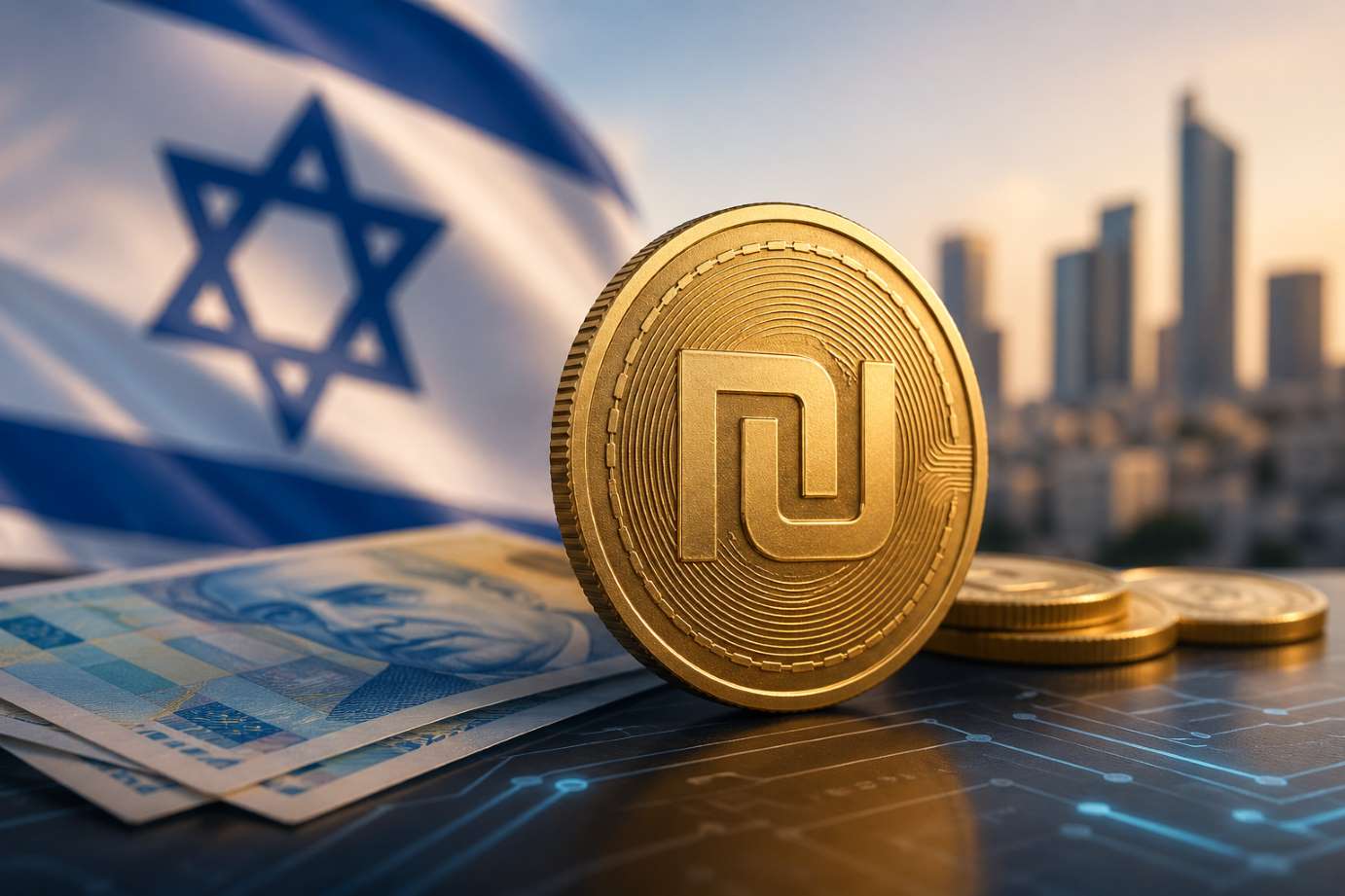
The approval allows crypto firm Bits of Gold to issue BILS, a token pegged 1:1 to the Israeli Shekel and backed by reserves held in local bank accounts. The move signals a shift from policy experimentation toward real-world deployment, while maintaining tight oversight of issuance and redemption.
From sandbox testing to limited rollout
The stablecoin was developed and tested as part of a two-year pilot supervised by Israel’s Capital Market Authority. During this period, the authority evaluated the system for operational resilience, compliance, and market behavior.
Part of the testing included blockchain infrastructure trials, with several reports pointing to integration on Solana. This suggests the project explored scalability and transaction efficiency before receiving approval.
The transition from sandbox to live issuance remains cautious. The regulator has authorized a limited rollout, meaning BILS will not immediately operate at full scale. Instead, the launch will expand gradually as compliance and operational benchmarks are met.
Strict reserve and compliance requirements
Under the approval terms, the BILS stablecoin must be fully backed by fiat reserves held in segregated accounts within Israel. The company cannot mix these funds with others of its assets, reducing counterparty risk and improving transparency.
Bits of Gold must also ensure continuous liquidity and redemption capabilities. Users must be able to convert the token back into Shekels under defined conditions, a key safeguard that aligns with global stablecoin standards.
Additional obligations include ongoing reporting to regulators, disclosure of material changes, and adherence to cybersecurity and custody requirements. These controls position the project closer to regulated financial infrastructure than to typical crypto token launches.
Not a central bank digital currency
The approval has drawn attention partly because of confusion with Israel’s broader digital currency plans. However, the Shekel stablecoin approved here is not a central bank digital currency.
The Bank of Israel continues to explore a digital Shekel as a potential future payment system, but it has not confirmed an official launch yet. In contrast, BILS is a privately issued asset operating under regulatory supervision, not a direct liability of the central bank.
This distinction matters for users and institutions. A private stablecoin carries different risk assumptions and governance structures than a CBDC, even when both are denominated in the same national currency.
Bringing a local currency on-chain
The introduction of a regulated Shekel stablecoin places Israel among a growing number of jurisdictions experimenting with tokenized versions of fiat currencies.
While U.S. dollar-backed stablecoins dominate global markets, local currency stablecoins can address specific regional needs, including domestic payments, settlement efficiency, and integration with local financial systems.
In Israel’s case, the controlled rollout suggests regulators are prioritizing stability over rapid expansion. By limiting issuance and enforcing strict reserve management, authorities appear focused on minimizing systemic risk while still enabling innovation.
>>> Read more: Western Union Targets May USDPT Stablecoin Launch on Solana
What comes next
The long-term impact of the Shekel stablecoin will depend on adoption, integration, and regulatory evolution. If BILS proves reliable in real-world use, it could pave the way for broader stablecoin frameworks in Israel.
At the same time, its development runs parallel to the central bank’s exploration of a digital Shekel, creating a dual-track approach to digital currency innovation.
For now, Israel’s decision reflects a measured strategy. It allows private-sector experimentation with fiat-backed tokens, while keeping tight regulatory control over how those assets enter the financial system.