


TL;DR
- Strategy sold about $218.4 million of Bitcoin in 2026 to help fund preferred-stock dividends.
- The reported $8.22 billion quarterly loss was mostly an unrealized accounting markdown, not a cash loss or large-scale Bitcoin sale.
- The company continues to grow its BTC holdings while using selective sales and a dollar reserve to manage rising dividend and financing obligations.
Strategy disclosed on July 30 that its Bitcoin sales during 2026 totaled about $218.4 million and helped fund preferred-stock dividends. The sales put a dent in a strategy built on the premise that Strategy would never sell.
The disclosure came alongside an $8.22 billion second-quarter net loss. Most of the loss was an unrealized markdown from a lower quarter-end Bitcoin price. It did not involve cash outflows or equivalent BTC sales.
Strategy is now using Bitcoin from its reserve to support a growing financing structure. The company still holds more than 843,000 BTC, but accumulation is no longer the only permitted use of its holdings.
The $8.22 billion loss was mostly unrealized
Strategy recorded an $8.32 billion unrealized loss on its Bitcoin during the quarter. Under fair-value accounting, the company updates the balance-sheet value of its holdings as Bitcoin’s market price changes. Gains or losses flow into reported earnings even when Strategy does not sell the coins.
Strategy earned $10.02 billion in the second quarter of 2025, when rising Bitcoin prices generated a large unrealized gain.
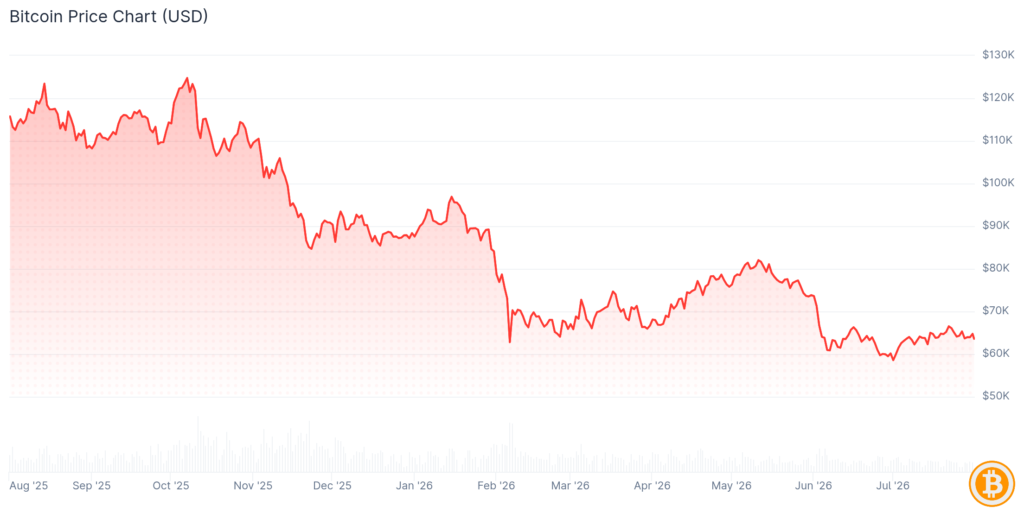
Strategy held approximately 843,775 BTC as of July 26. The company reported an original acquisition cost of $63.69 billion and a market value of $54.77 billion, using a July 27 price of $64,915.
Its average purchase price was about $75,476 per Bitcoin. The gap between cost and market value can change and does not represent a realized loss on the full reserve.
Bitcoin can now fund several obligations
Strategy’s board-authorized BTC Monetization Program allows the company to sell Bitcoin for several purposes. These include building its dollar reserve, paying preferred dividends and interest, and funding securities repurchases.
Strategy’s shift toward selling Bitcoin began earlier than the July 30 disclosure. The $218.4 million figure covers the year through July 26, not just the second quarter. On June 1, 2026, the company disclosed in an SEC filing that it had sold 32 BTC between May 26 and May 31 for about $2.5 million, its first Bitcoin sale since December 2022. The move drew renewed public scrutiny of Michael Saylor’s long-standing “never sell” position, including past remarks that holders should part with a kidney before their Bitcoin. Saylor addressed the criticism at the BTC Prague conference on June 11, 2026, describing the sale as routine treasury management tied to a defined financial obligation, not a reversal of Strategy’s Bitcoin thesis.
Preferred-stock dividends had a growing effect on the quarter’s results. Strategy reported $400.7 million of preferred dividends, up from $49.1 million one year earlier. Those payments increased the loss attributable to common shareholders above the company’s overall net loss.
Strategy has not abandoned its Bitcoin treasury: holdings grew 25% during 2026 through July 26. Selling Bitcoin gives the company another source of cash when dividends and interest come due.
>>> Read more: Strategy Signals Possible Bitcoin Sales After Q1 Loss
A dollar reserve provides a cash buffer
Strategy said its dollar reserve had reached $3.75 billion by the results announcement. Management estimated that the reserve could cover more than 2.1 years of its existing preferred dividends and interest obligations.
That figure is larger than the company’s June 30 cash position of $1.71 billion in cash and cash equivalents plus $736.1 million in short-term investments, reflecting subsequent financing activity.
Strategy raised $17.06 billion through at-the-market securities offerings during 2026 through July 26. It also reduced its convertible debt from $8.21 billion to $6.71 billion by repurchasing notes at a discount.
Separately, the company authorized a $1 billion repurchase program for MSTR common shares. However, no common-stock repurchases had occurred by July 26. Strategy did spend about $25 million repurchasing STRC preferred shares below their stated value.
Future Bitcoin sales remain uncertain
Strategy has not provided a schedule or target for further Bitcoin sales. Bitcoin prices, financing conditions, and the size of future preferred-stock obligations will likely shape how much it sells and when.
Those obligations are growing. Further preferred-stock issuance would add to the recurring cost already driving the dividend increase. Raising capital through common shares avoids that cost but dilutes existing shareholders, so each financing option carries a different tradeoff for the company and for investors.
The dollar reserve is the clearest gauge of how much pressure that creates. Whether its current coverage window holds, shrinks, or grows in future disclosures will show how tightly Bitcoin sales stay tied to the cost of servicing Strategy’s preferred securities.