


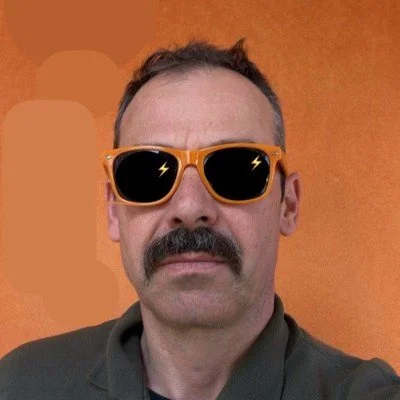
There is a particular kind of frustration that comes with knowing something is broken but not being able to name exactly what it is. Stefan Smith knows this feeling well. He has spent the better part of a decade turning it into a career.
Smith is a Bitcoin adviser and one of the founding members of 21Bitfluencers, a network of Bitcoin-only voices dedicated to cutting through the noise of an industry that generates a lot of said noise. We sat down with him this June at BTC Prague 2026, Europe’s largest Bitcoin conference, on a day when the halls were so loud with energy that we eventually gave up looking for a quiet corner inside and stepped outdoors instead. It was raining lightly. We didn’t mind.
Twenty Years in the Corporate World
Before Bitcoin, Stefan Smith spent two decades working in marketing and export sales for some of Europe’s largest consumer companies: a leading cosmetics firm, then a major paper company. By his own account, it was a perfectly respectable career. It was also, eventually, not enough.
“Aged 48, I thought, my job was not stimulating anymore. And the window of opportunity to restart my career is shrinking.”
So he left. With no clear destination, but with one conviction: that everything that can be digitised will be digitised. He started working with startups, leaning on his sales background to explain products he hadn’t built and didn’t fully understand yet. It paid very little. Then COVID arrived, and like millions of others, Smith found himself staring at his finances and wondering if there was a better way.
He started investing on his own; stocks, commodities, crypto. And he made, as he puts it, his “huge mistakes.” He lost money. Then he went through what he describes as the ego test: the moment where you have to decide whether Bitcoin failed you, or whether you failed Bitcoin.
“It’s not Bitcoin’s fault. It’s my fault. Bitcoin is just a protocol. It doesn’t care what you build on it or what you do with it, like the internet back in the 2000s.”
He passed the test. And once he understood Bitcoin, he went all in. He dedicated his time and energy entirely to it. He quotes Jeff Booth: a system that works, instead of a system that works against the people.
The Goldfish
Ask Smith why so many Europeans intellectually understand Bitcoin but still haven’t acted on it, and he reaches for an image that stops you in your tracks.

We are literally like a goldfish in a dirty water bowl — and we think it’s normal.
His point is not about Bitcoin. It is about money itself. People don’t hesitate out of fear or laziness, he says. They have never been given the tools to identify the actual problem. The social issues, the political dysfunction, the economic anxiety that people feel; Smith believes all of it traces back to the same source: the quality of money.
“People don’t realise they cannot pinpoint where our problems come from. And it all literally goes down to the quality of money. We are in a system of broken money, but we don’t realise it. And dirty water will not clean up itself.”
This is the conversation he has, over and over, with clients across Europe. Not a sales pitch. Not a price prediction. A reframing. Once someone understands that the measuring tool itself is broken, that a euro today is not the same as a euro tomorrow, the rest tends to follow.
He illustrates it with the kind of analogy that makes it click: “It’s like saying it’s normal to measure distance with a metre, but next year one metre will equal one metre and ten. The very tool of measurement is not fixed.”
The Price Is the Distraction
One of the more counterintuitive things Smith says is that Bitcoin’s price, the number everyone watches, is actually one of the biggest obstacles to people understanding it.
“People think: oh, it’s too expensive now, I won’t buy it. Or: it dropped 50%, I’ll wait for it to drop another 30%. And in the end, they just miss the train, because they never do the ego test to realise that fiat money is infinite and Bitcoin is only 21 million coins.”
The short-term volatility, he says, is human volatility. Bitcoin itself produces a block every ten minutes, reliably, regardless of what the price is doing. The protocol does not panic. People do.
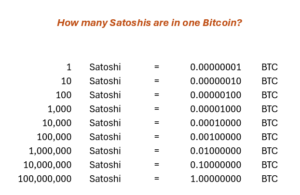
For Smith personally, the mental shift is already complete. He measures one coffee at roughly 2,000 satoshis, the smallest unit of Bitcoin. The euro price of Bitcoin, he says, is “kind of a noise.”
Filtering the Signal
Beyond his advisory work, Smith occupies a second role that says something interesting about the Bitcoin ecosystem: he is one of the 21 founding members of 21Bitfluencers, a coordinated network that helps Bitcoin-only companies reach Bitcoin-native audiences.
In a space overrun with projects that dress themselves up in Bitcoin’s language without sharing its values, the filtering question is obvious. How do you tell the real from the fake?
“We scan through candidate clients and make sure it’s Bitcoin-only companies and products. We do due diligence. We test their products. But honestly, in general, just by our conversations, when the word ‘shitcoin’ comes to the surface, we understand very quickly whether we’re talking to a true Bitcoiner or an affinity scammer.”
The red line, for Smith, is simple: any blockchain with its own token anchored to Bitcoin is a shitcoin. Once that line is crossed, the conversation is over. What remains after that filter, he argues, is worth amplifying because growing the Bitcoin ecosystem is a win for everyone inside it.
Is Europe Really Shifting?
At a conference full of conviction, it is worth asking the harder question: is the broader European public actually moving toward Bitcoin, or is this still a gathering of the already-converted?
Smith’s answer is more grounded than you might expect from someone standing inside the cathedral.
“At the moment, there is absolutely no hype. If you look at Google searches for Bitcoin, it’s at almost an all-time low. People are not interested now, mainly because of the price.”
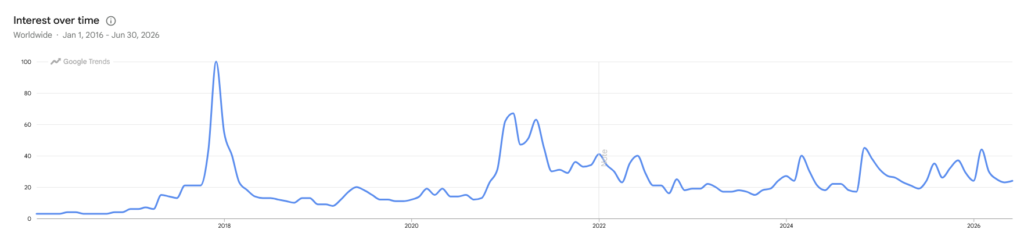
And yet, he insists, something real is happening beneath the surface. Bitcoin adoption, he says, is growing organically and constantly, though it is not driven by excitement, but by need. Governments that tax more, control more, and print more are, inadvertently, doing Bitcoin’s marketing for it.
“People feel they need to escape. And this is how they end up discovering crypto in general, and Bitcoin in particular.”
The adoption he tracks is not the kind that shows up in Google Trends. It is the kind that shows up in his clients’ conversations. People who have watched their purchasing power erode quietly for years are finally asking why.
The One Thing
Our final question at the end of our conversation was this: if someone sitting on the fence about Bitcoin listens to this, what is the one thing you want them to walk away thinking?
Instead of talking about price or the technology, he presents a statistic that stuck with him.
“Why does only six percent of 30-year-olds own a house today, when it was thirty percent in 1970? This is not normal. And it is exclusively due to the quality of our current money.”
Don’t go straight to buying Bitcoin. Study it, he says, because studying Bitcoin teaches you by contrast how the current system actually works. And once you see that, you cannot unsee it.
“Your time, your energy is being stolen away. Because you work, they print. Even if you think you don’t need Bitcoin, studying it will show you why the system relentlessly works against you, regardless of your merits and the work you produce.”
It is, as the interviewer notes at the end of the conversation, a strong message.
Smith smiles. “Thank you very much.”