


TL;DR
- The ARMA bill would codify the U.S. Strategic Bitcoin Reserve into federal law.
- Earlier Bitcoin reserve bills from Nick Begich and Cynthia Lummis remain stalled in committees.
- The proposal keeps a 1 million BTC target but does not mandate active Treasury purchases.
U.S. lawmakers are once again attempting to formalize President Donald Trump’s Bitcoin reserve policy after more than a year of limited congressional movement on the issue.
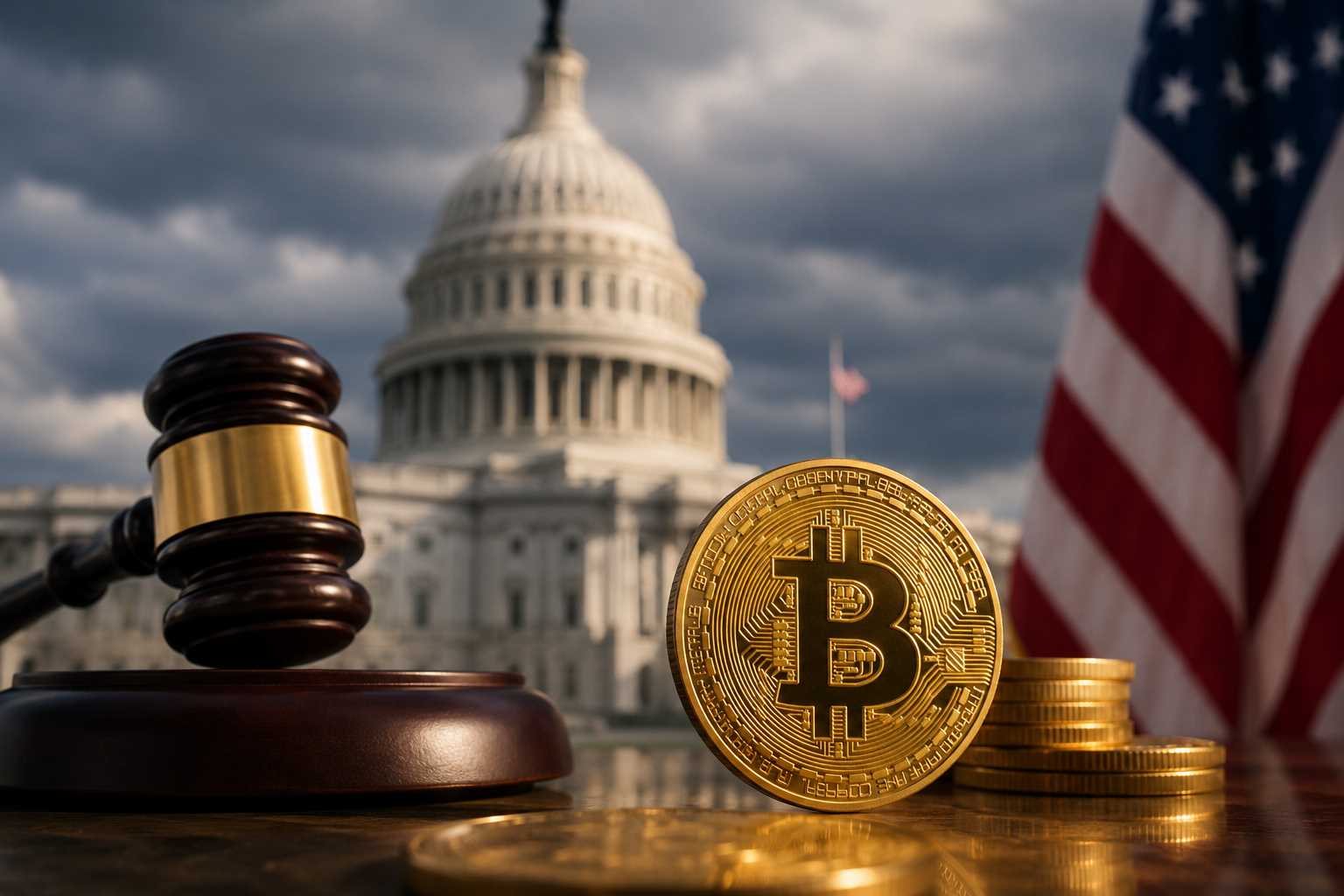
The latest effort comes through the proposed ARMA bill. It aims to codify the U.S. Strategic Bitcoin Reserve into permanent federal law. The push follows Trump’s March 2025 executive order establishing the reserve without direct congressional approval.
While crypto markets and social media users have largely framed the development as bullish for Bitcoin, the practical impact for ordinary Americans remains limited for now.
The bigger significance may lie in how parts of Washington increasingly view Bitcoin. Some lawmakers now see it as a potential long-term strategic asset rather than a fringe speculative technology.
Earlier Bitcoin Reserve Bills Stalled in Congress
The new proposal arrives after previous legislative efforts struggled to gain momentum in Congress.
Shortly after Trump’s March 2025 executive order, Senator Cynthia Lummis re-introduced her Bitcoin Act (first proposed in July 2024) as Senate bill S.954. Congressman Nick Begich introduced H.R.2032, known as the Bitcoin Act of 2025, as the companion bill in the House.
Those proposals attempted to establish a broader legal framework around federal Bitcoin holdings. They also attracted attention for discussing large-scale Bitcoin accumulation targets, including a potential 1 million BTC acquisition plan.
However, despite strong support from parts of the crypto industry, the bills remained stuck in congressional committees with little meaningful progress. That lack of movement suggests the issue has not ranked among the highest legislative priorities in either the House or Senate, even under a crypto-friendly political environment.
Congress has instead focused more heavily on stablecoin regulation, crypto market structure, and digital asset oversight. Those issues directly affect broader financial markets and banking systems.
>>> Read more: Strategic Bitcoin Reserve: Expectations vs. Reality
Why Lawmakers Are Trying Again
The renewed push appears largely driven by one major concern: executive orders are temporary.
Because Trump’s Bitcoin reserve was created through executive authority rather than legislation, a future administration could potentially reverse or dismantle the framework. Codifying the reserve into law would make the policy significantly harder to unwind.
Supporters argue the Strategic Bitcoin Reserve would help formalize Bitcoin’s role as a long-term sovereign reserve asset similar to gold or other government holdings.
The ARMA bill keeps the earlier 1 million BTC target, but changes how that goal would be pursued. Unlike the Bitcoin Act of 2025, ARMA does not mandate Treasury purchases of 200,000 BTC per year. Instead, the bill directs Treasury and Commerce to study possible budget-neutral Bitcoin acquisitions.
The 1 million BTC figure therefore remains an aspiration rather than an immediate requirement.
The proposal also includes a 20-year holding structure. However, Bitcoin could still be sold before that period expires if the proceeds are used to reduce the national debt.
That shift may reflect political realities inside Congress.
Preserving a reserve that already exists is likely easier to defend politically than proposing aggressive mandatory Bitcoin purchases. Fiscal concerns and national debt levels remain major issues in Washington.
What This Means for Ordinary Americans
Despite the excitement surrounding the proposal in crypto circles, Americans should not expect immediate changes to daily financial life.
The dollar remains the dominant U.S. currency. Taxes are still paid in dollars. There is also no indication that Bitcoin would suddenly become integrated into routine government payments or consumer finance.
For most people, the proposal matters more as a long-term institutional signal than an immediate economic development.
Years ago, the central debate in Washington focused on whether cryptocurrencies should even be allowed to operate within the financial system. Now some lawmakers are openly debating whether Bitcoin should play a role in national reserve strategy.
That shift alone represents a major change in how Bitcoin is viewed politically and institutionally.
Still, analysts caution against interpreting the ARMA bill as evidence that Congress is preparing for rapid nationwide Bitcoin adoption.
The previous reserve bills spent more than a year without significant advancement. That highlights the limited urgency lawmakers have shown around the issue so far.
>>> Read more: Bitcoin for America Act: Bold Idea, Tough Execution Ahead
The National Debt Debate
Supporters of the reserve initiative often connect Bitcoin to growing concerns about U.S. national debt and long-term fiscal sustainability.
The argument centers on Bitcoin’s fixed supply structure. Unlike traditional currencies, Bitcoin cannot be expanded indefinitely through monetary policy. Some advocates therefore describe it as a hedge against inflation and long-term currency debasement.
However, the reserve proposal would not meaningfully solve America’s debt problem in the near term. The U.S. national debt is measured in tens of trillions of dollars. Even a large sovereign Bitcoin reserve would remain far smaller by comparison.
Instead, supporters view Bitcoin as a potentially appreciating reserve asset. They believe it could strengthen long-term government balance sheets if adoption and value continue growing over time.
Critics, meanwhile, argue that Bitcoin’s volatility still makes it difficult to justify as a core strategic reserve asset for the federal government.
For now, the broader significance of the ARMA bill may be less about immediate economic transformation and more about normalization.
Even without passage, the continued debate around a Strategic Bitcoin Reserve shows how Bitcoin is increasingly entering mainstream policy discussions surrounding sovereign reserves, strategic assets, and the future direction of the global financial system.