


TL;DR
- The Senate Banking Committee advanced the CLARITY Act in a largely partisan 15-9 vote after months of negotiations and industry disputes.
- Lawmakers remain divided over stablecoin rewards, DeFi oversight, and ethics provisions as the bill moves toward a tougher Senate phase.
- The legislation must still clear a 60-vote Senate threshold and later be reconciled with the House-passed version before reaching the president.
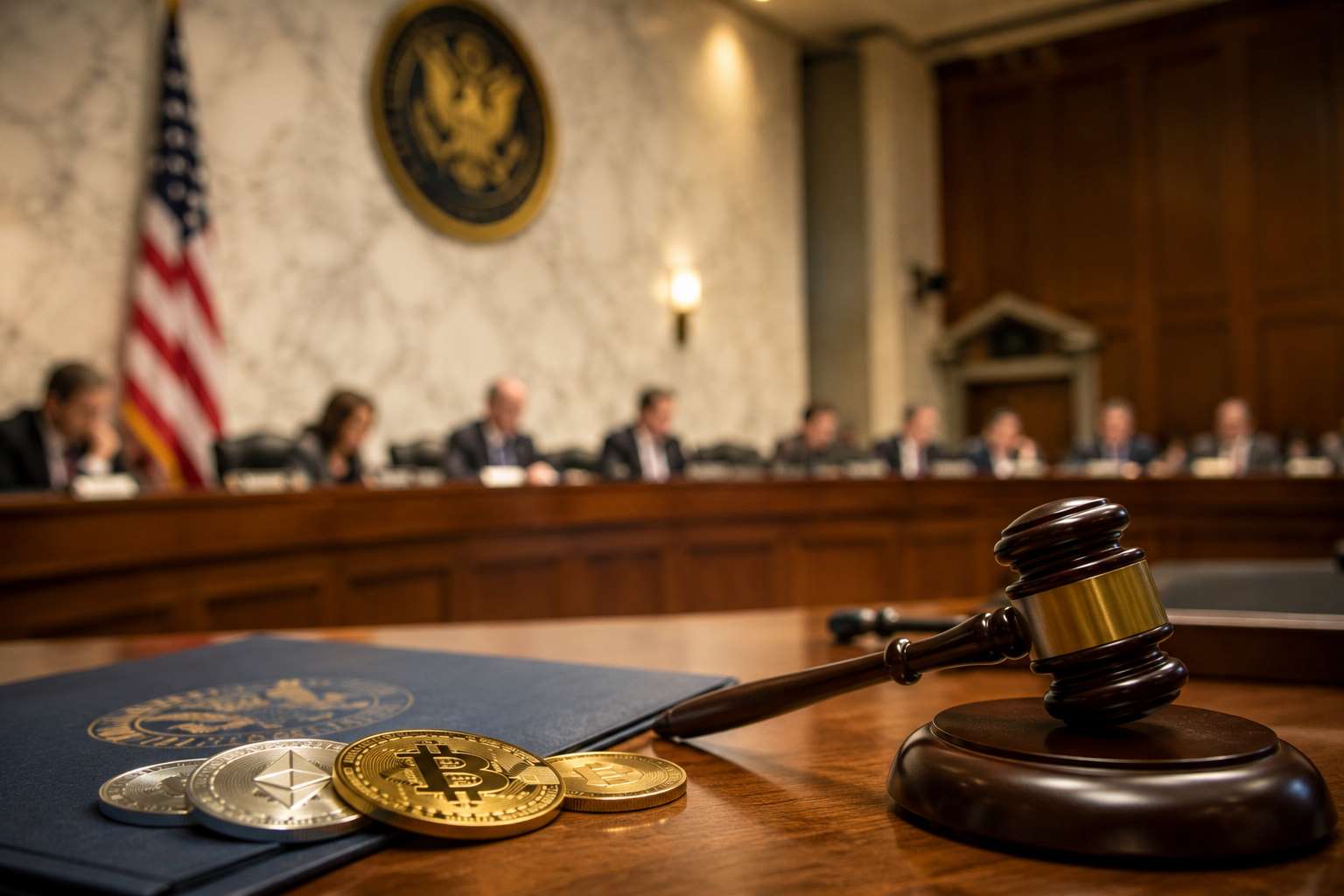
The Senate Banking Committee has advanced the CLARITY Act, moving a long-debated crypto market structure bill one step closer to a full Senate vote. The legislation cleared the committee in a 15-9 vote on May 14 after months of negotiations surrounding stablecoin provisions, oversight rules, and industry opposition.
The CLARITY Act committee vote marks one of the most significant crypto policy developments in Washington this year. Only two Democrats, Sens. Ruben Gallego of Arizona and Angela Alsobrooks of Maryland, voted alongside all 13 Republicans to advance the bill, underscoring the largely partisan nature of the vote.
The process leading to the markup stretched across several months. It included a cancelled January 2026 committee session, a lobbying push from banking groups, temporary opposition from Coinbase, and more than 100 filed amendments. The White House has also played an active role in negotiations between banks and crypto industry groups. The administration now reportedly targets July 4 for a presidential signature if legislation reaches the president’s desk.
Senate Banking Committee Advances Market Structure Push
The bill is designed to clarify how federal agencies regulate digital assets. One of its central goals is defining which cryptocurrencies fall under the jurisdiction of the Securities and Exchange Commission and which should be overseen by the Commodity Futures Trading Commission.
Supporters argue the current regulatory environment relies too heavily on enforcement actions instead of formal legislation. The proposed framework would establish rules for crypto exchanges, brokers, and digital asset issuers while creating a more standardized approach to compliance.
The committee approval does not immediately send the legislation to the Senate floor. The bill must first be merged with a separate version already passed by the Senate Agriculture Committee on January 29, 2026. Only then can the Senate leadership schedule a broader vote.
Stablecoin Rewards Became a Major Flashpoint
Negotiations around stablecoin incentives played a major role in delaying the markup process earlier this year. Banking groups warned lawmakers that allowing crypto firms to offer yield-like rewards on stablecoin balances could draw deposits away from traditional financial institutions.
Updated language in the legislation reportedly restricts certain interest-style payments on idle balances while still allowing some transaction-related rewards. That compromise helped move the bill forward, although several banking organizations said loopholes may still remain.
The issue has become increasingly important. Stablecoins are growing beyond crypto trading and are moving deeper into payments and financial infrastructure discussions.
Democrats Remain Divided on Crypto Oversight
The committee vote also exposed continued divisions among Democrats over the CLARITY Act and how aggressively the crypto industry should be regulated. Several lawmakers raised concerns about decentralized finance platforms, sanctions enforcement, and ethics rules connected to public officials’ digital asset holdings.
Some amendments introduced during the markup process failed to gain enough support. This included proposals tied to broader oversight authority and stricter compliance requirements for DeFi activity.
Alsobrooks, one of the two Democrats who voted in favor of the bill, said her committee support does not guarantee a future floor vote. She said unresolved issues, including ethics provisions and DeFi oversight, still need to be addressed.
Despite those disagreements, the bill still secured narrow bipartisan backing. It gave the crypto industry a legislative victory after months of uncertainty surrounding market structure negotiations.
>>> Read more: Ethics Dispute Adds New Roadblock to CLARITY Act
Crypto Markets React to Legislative Momentum
Crypto-related stocks and major digital assets rallied following the committee approval. Shares tied to the crypto sector moved higher alongside gains in Bitcoin, XRP, Dogecoin, and Ethereum as investors reacted to signs of regulatory progress in Washington.
While the market response reflected optimism around clearer crypto rules, analysts cautioned against attributing all price movement solely to the legislation. Broader market sentiment and macroeconomic conditions also continue to influence digital asset trading activity.
Still, the reaction highlighted how closely investors are watching U.S. regulatory developments after years of uncertainty between crypto firms and federal agencies.
Senate Floor Vote Becomes the Next Major Test
The bill still faces several hurdles before becoming law. After Senate committees finalize a combined version of the legislation, the measure will require at least 60 votes to advance through the full Senate. That means several additional Democrats would likely need to support the bill.
The House already passed its own version of the CLARITY Act on July 17, 2025, in a 294-134 vote. If the Senate eventually approves its version, lawmakers from both chambers would still need to reconcile differences between the two bills. Only then could final legislation be sent to the president.
Even so, the committee approval represents a major step forward for the broader crypto market structure effort. The outcome of the Senate process could shape how digital assets, stablecoins, and crypto trading platforms are regulated in the United States for years to come.
The CLARITY Act committee vote may ultimately be remembered as the moment Congress moved closer to establishing a comprehensive federal framework for the crypto industry.