


TL;DR
- Elizabeth Warren urged Senate leaders to add ethics provision to the crypto market structure bill ahead of a potential vote.
- The move escalates pressure around conflicts of interest but the language in the legislation has not changed thus far.
- The outcome may affect support for the CLARITY Act (Digital Asset Market Clarity Act)
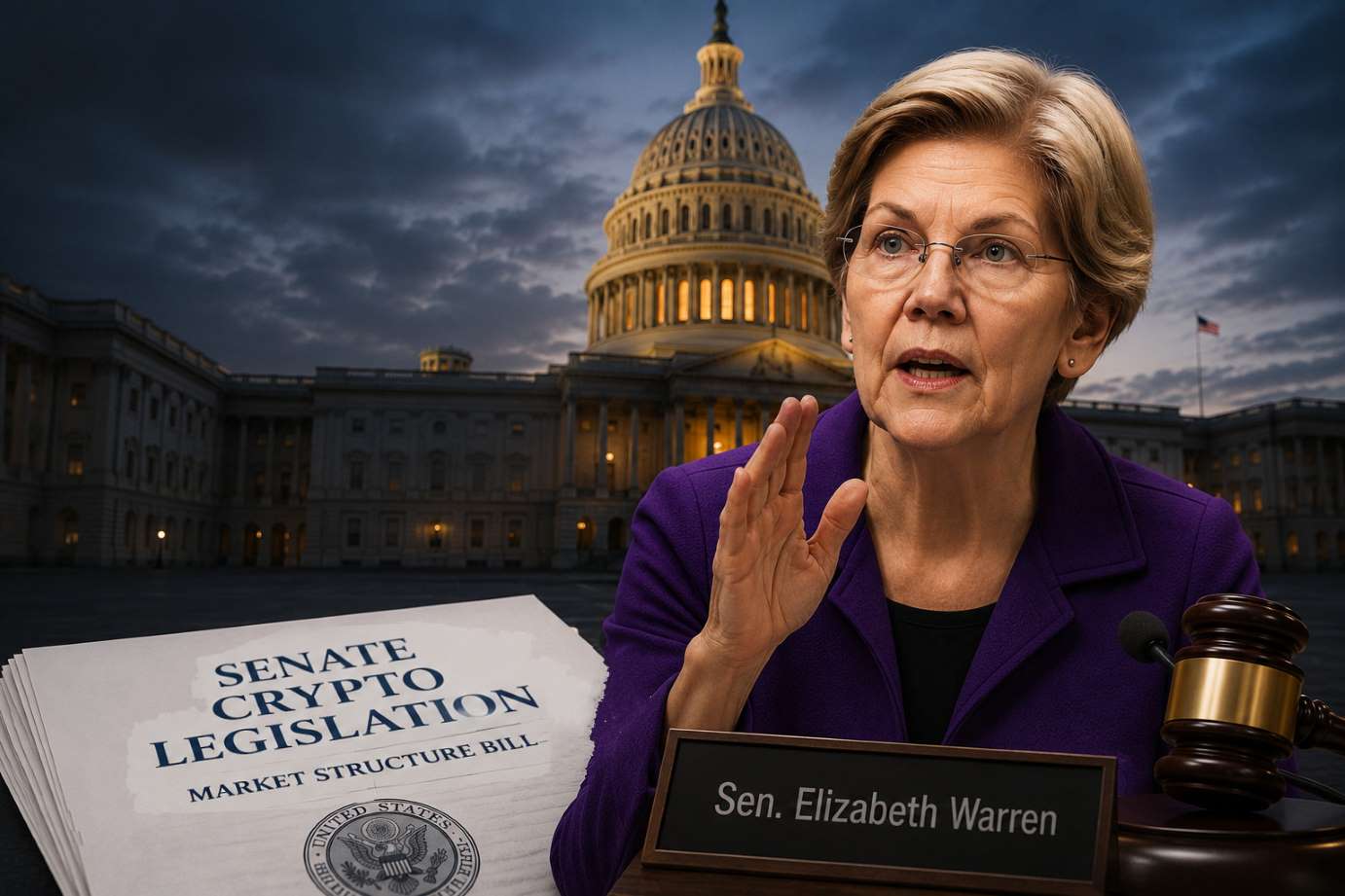
Senator Elizabeth Warren has pushed Senate leaders to add ethics provisions to the CLARITY Act (Digital Asset Market Clarity Act), reopening a political fault line just as Republicans aim to bring the crypto bill to a floor vote.
Though her July 13 letter is sharp, it is not a change in the proposed legislation. But it intensifies an ongoing Senate dispute over whether lawmakers should embed ethics rules directly into crypto legislation. At its core is a question that could influence the bill’s chances of passage: who is allowed to benefit from the crypto industry while writing its rules.
Warren presses for ethics rules in the bill
Warren, the ranking Democrat on the Senate Banking Committee, wrote to Majority Leader John Thune and Minority Leader Chuck Schumer urging them to include restrictions on senior officials’ crypto interests in the bill.
Her proposal would apply to the president, vice president, senior administration officials, and members of Congress. The goal is to prevent them, and their families, from profiting from crypto markets while shaping the regulatory framework.
The letter points directly to President Donald Trump’s family crypto activities. Warren cited his 2025 financial disclosure and argued that those interests create conflicts of interest as lawmakers debate rules that could affect the industry.
That claim reflects Warren’s interpretation of the disclosure. The letter itself does not establish unlawful conduct.
Why this matters for the broader legislation
The Senate’s market structure bill focuses on defining clearer federal rules for crypto markets. It would divide oversight between regulators, define requirements for trading platforms, and address issues such as stablecoin rewards, anti-money-laundering controls, and tokenised securities.
Those areas are already contested. Banks and crypto firms disagree over how stablecoin incentives should work. Some Democrats are pushing for stricter financial-crime safeguards. Others are focused on market structure and regulatory clarity.
Warren’s intervention adds a different pressure point. The inclusion of ethics provisions in crypto legislation could shape how many Democrats are willing to support the bill. Without that support, passage becomes more difficult.
At the same time, there is little visibility on where the votes stand. The letter signals a demand, not a consensus.
A political shift, not a legislative one
What changed is the political cost of moving forward without ethics language. The Senate Banking Committee’s top Democrat has now escalated the pressure by putting the demand in writing to Senate leadership directly.
What has not changed is the bill itself. No amendment has been introduced, no new text has been agreed, and nobody knows when it will reach the floor for a vote.
Timing remains uncertain. Warren wrote that Thune aims to hold a floor vote this month, and reporting has echoed that intention. But an aim is not a formal schedule. The timeline, and the final wording, can still shift.
It is also important to separate the debate. The current dispute in the Senate focuses on who may benefit from the crypto industry, not on how the regulatory framework itself would function. The core market-structure provisions remain unchanged.
What to watch next in the bill text
The decisive moment will be the release of floor language or an agreed amendment. That will show whether Senate leaders are willing to include ethics rules and how broadly they would apply.
And key details will matter here. Do the restrictions cover only elected officials, or senior appointees as well? Do they extend to family members? And are they strict prohibitions or disclosure-based requirements?
Until those questions are answered, the ethics dispute around the Senate’s crypto legislation remains a live negotiation, with the outcome still uncertain.
No, Elizabeth Warren did not block the bill. But she has raised the political cost of moving forward without ethics language. Whether that cost is high enough to change the outcome is now up to Senate leaders, not up to her. Is it worth the Democratic support it might buy them, or the Republican votes it might cost?